About
Editorial Board
David Pannell. Host and writer of the podcast. Published Beatles researcher in the Journal of Beatles Studies. Regular blogger, including sometimes on The Beatles. University researcher and educator. Former professional musician. Recordings on BandCamp. Based in Perth, Australia.
Steven Cockcroft. Co-host (with Jason Carty) of everyone’s favourite Beatles podcast, Nothing Is Real. Produced a radio series for the BBC on The Beatles in Ireland. Winner of “Beatles Brain of Ireland” Beatles trivia competition. George fan. Collector of all things Beatles.
Greg Armstrong. Co-author of When We Was Fab: Inside The Beatles Australasian Tour 1964, a wonderfully detailed record of one of The Beatles’ most amazing but most overlooked tours. Co-host of weekly Beatles radio show, Let It Be Beatles.
Marcus Phelan. Experienced professional musician in Australia, including in Beatles tribute bands and many others. Specialises in analysing who played what instrument and what parts on Beatles songs. Has a fantastic YouTube channel where, amongst other things, he deconstructs Beatles songs. Guest on SATB.
Stefan Koch. Professional cellist. Has played with multiple classical orchestras in the US and released three CDs of chamber music. Has also performed with many non-classical artists, including Dionne Warwick & Burt Bacharach, Dave Brubeck, and Earth Wind and Fire.
Garry Stanton. Singer, guitarist and bassist in many bands, including Beatles tribute band, Kings of Marigold, from Fife, Scotland. Recording artist/ songwriter.
Background to the podcast
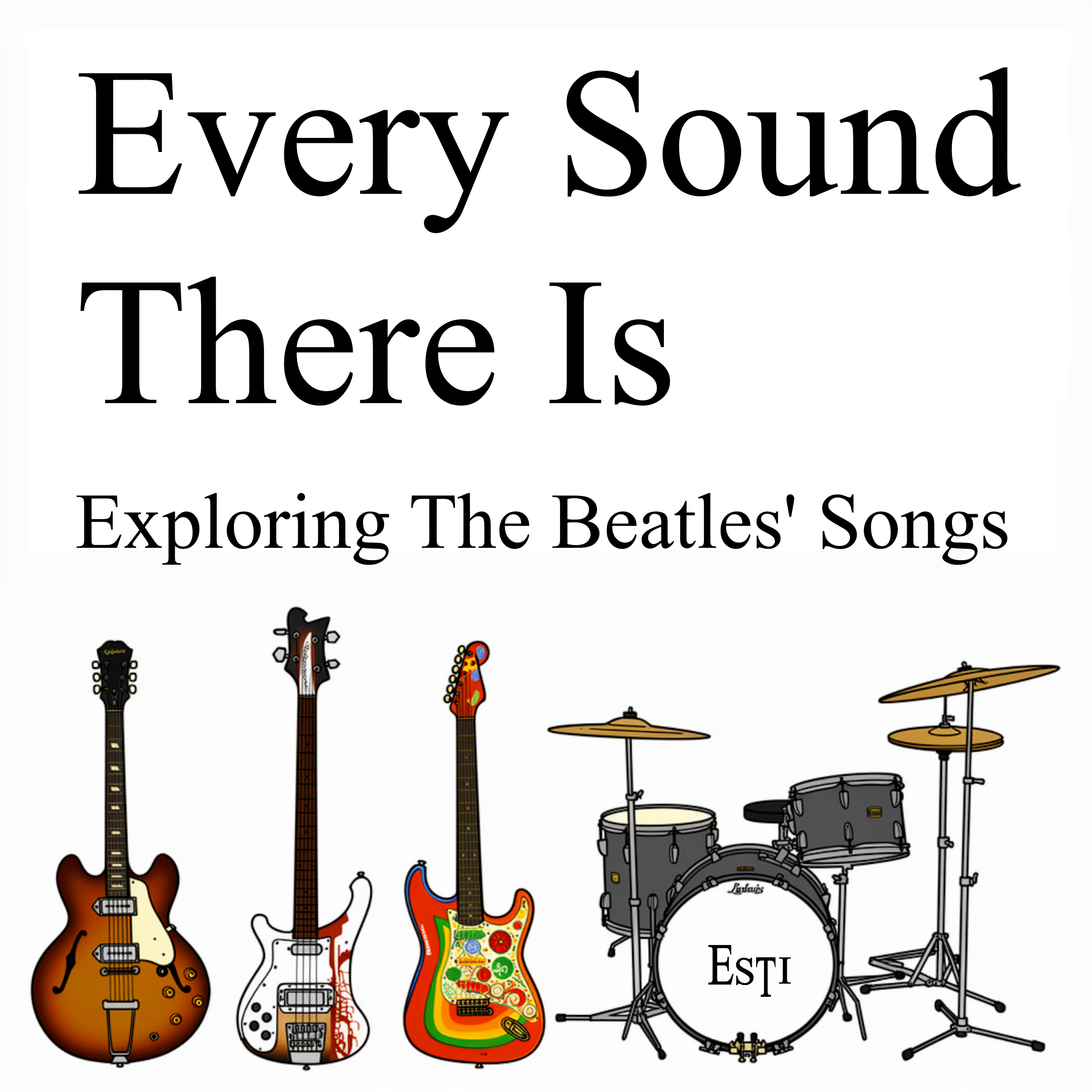
In 1966, The Beatles sang, “You tell me that you’ve heard every sound there is.” In this podcast, I’ll be talking about every sound the Beatles made in the songs they released through EMI between 1962 and 1970. I’ll be looking at the stories behind each song, its composition, arrangement, recording process, lyrics, instruments, and much more.
There will be lots of fascinating details and stories. My aim is to get you to marvel afresh at the miracle that is the Beatles’ body of songs and recordings.
As a Beatles fan, one of the most exciting things ever for me was reading Mark Lewisohn’s book The Complete Beatles Recording Sessions, when it was released in 1988. I knew all the songs inside out from having played them countless times, but I had only a general sense of the process by which they were created. The book gave me detailed insights into the process, and it allowed me to hear the songs again in new ways. After getting so used to the songs, the book enriched and refreshed my listening experience.
My aim in this podcast is to get you to feel something like that. Thanks to Mark Lewisohn, and many others, there is a huge wealth of information available about each song. A podcast provides the perfect platform to present all the interesting details and stories I can find.
I love getting inside the songs and knowing everything about them. That’s why I’m doing this. I want to share that passion, interest, and knowledge with other fans who are also interested in these details, or who may become interested. And I want to contribute as best I can to sustaining the joy that The Beatles have brought to the world. This is no minor thing. In a world with so many troubles, we all need joy, and The Beatles have probably brought more joy to the world than any other artist of any kind.
There were 217 Beatles tracks released by EMI between 1962 and 1970, but only 208 different songs because seven of them have come out in two versions and one has three versions. The order in which I cover the songs will be random. This will highlight their diversity and the incredible speed of progress of The Beatles’ development. When a song from 1967 is sequenced after a song from 1963, it’s like leaping forward by four decades, not four years.
I’ll be relying on multiple sources for the information, including books, the internet, videos, CD booklets, and the recording themselves. I’ll be carefully acknowledging all sources in the transcripts for the episodes.
The volume of information available is huge, but some of it is not accurate, or is subject to different claims by different authors. I will describe these differences, and I will do my best to identify which claims are most likely to be true. The topic is so big and so complex that I’m sure to say things that some expert listeners will disagree with. I’m very willing to be corrected, and to discuss the evidence and reasoning behind a claim.
There are, of course, a number of books out there that do something a bit like what I’ll be doing in this podcast. I’ll be drawing information from them, but as far as I’m aware none of them include all the different types of information I’ll be talking about. Because I will only cover one song per episode, or if necessary two episodes, I can really get stuck into that song in as much detail as is relevant and interesting, whereas the books are constrained in size. For example, one of the highest profile books about The Beatles’ songs is Revolution In The Head by Ian MacDonald. It devotes less than 400 words to “And Your Bird Can Sing” whereas in episode 1 I devote more than 8,000 words to it.
I want to acknowledge two electronic resources where there is some common ground with what I will be doing. One is the podcast The Beatles: Note By Note (https://www.notebynoteseries.com/). I have been planning to do this podcast for about 10 years so initially I was a bit disappointed to discover Note By Note, which seemed to have beaten me to the punch. Kenyon and Peter do a great job but I decided that my approach will be different enough that there is room for two podcasts about The Beatles’ songs.
The other resource is the Beatles Music History web page, put together by Dave Rybaczewski. Dave has done an amazing job of collating similar sorts of information as I’ll be covering, in a web page format. His site is highly complementary with what I’ll be doing, and I encourage you to go there to check it out. (http://www.beatlesebooks.com/)
If you’re wondering about my background, on the day I was born, The Beatles’ were playing at The Indra, on their first visit to Hamburg. I’ve been a devoted fan since 1970. I worked as a professional musician and songwriter for a while, but we didn’t become the next Beatles, which was a disappointment and a surprise! As a musician I am not a virtuoso but I have a good ear. I can hear what is going on in a piece of music and I aim to describe it in a way that helps you hear new things. I understand the recording process and recording technologies. After music, I got a proper job that involved collecting, analysing and integrating information, and communication in every possible format. I’m a professional researcher and educator, and in this podcast, I’m applying my skills to research and education on The Beatles.
That’s it for this Introduction to Every Sound There Is. I hope you enjoy the podcast.
David Pannell, 2 June 2026